French Bulldog Allergies and Itchy Skin: When to Call the Vet
Please see your vet. This guide is general education, not a diagnosis or treatment plan. If your Frenchie seems unwell, call your veterinarian. If it looks like an emergency, go to an emergency vet right away.
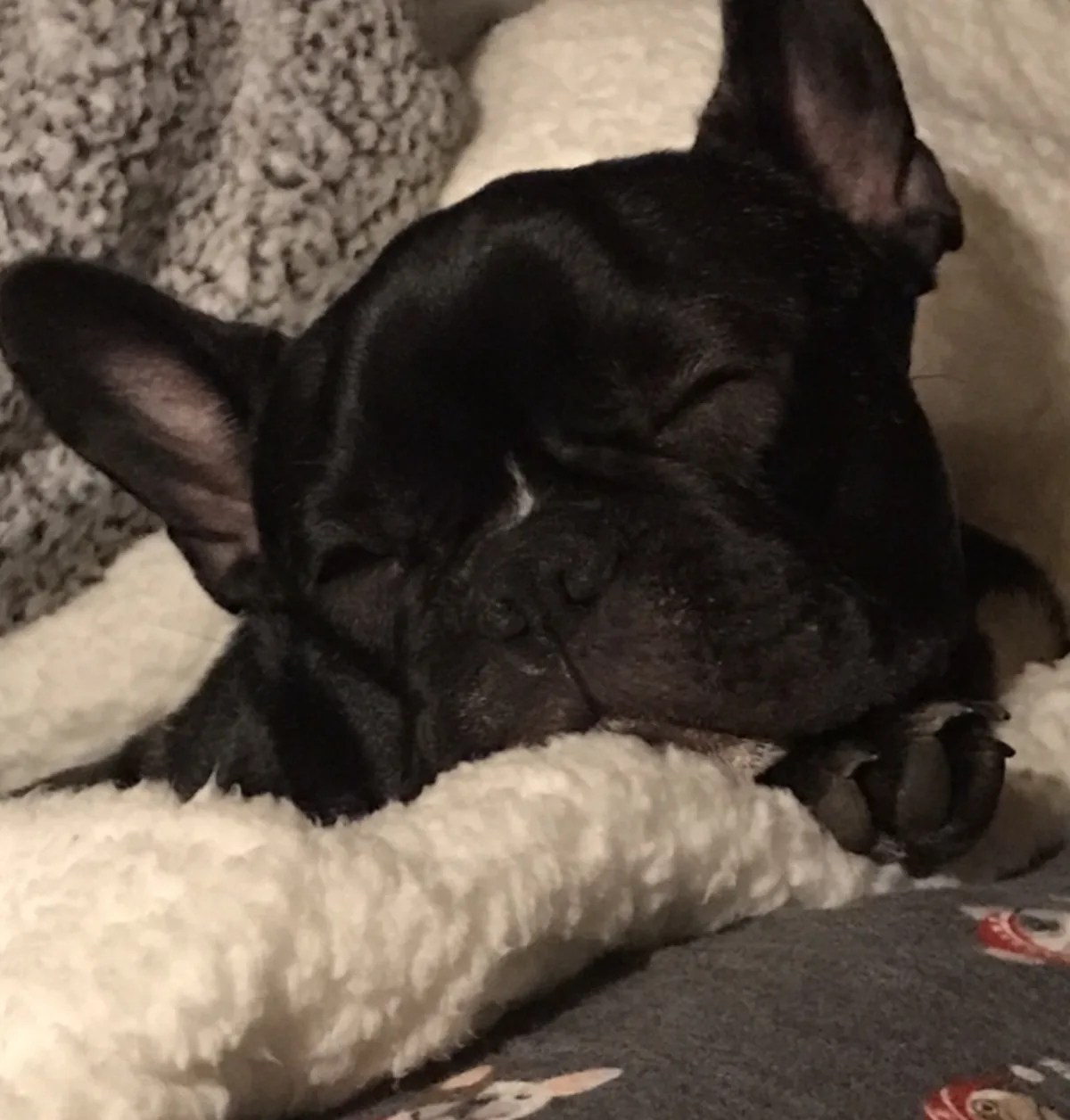
Photo: MiniLop1234 via Wikimedia Commons, CC0
🐾 Getting ready for a puppy? Try the interactive French Bulldog puppy checklist — free, no email required.
Itchy French Bulldogs are common enough that “Frenchies have allergies” has become a cliché. The useful question is narrower: what is irritating this dog, and what does your veterinarian want to check first?
This article is education only. It does not diagnose atopy, food allergy or infection, and it does not recommend drugs or doses.
Why Frenchies show up in dermatology rooms
VCA covers common allergy pathways in dogs—food, fleas and environmental allergens—that show up as itch, redness and secondary skin infection. Merck notes that warm, moist facial and body folds carry higher bacterial counts, so irritated fold skin can escalate quickly. Short coats make redness easier to see—and easier to scratch raw.
Fold hygiene (see skin folds and grooming) helps comfort but does not replace a workup when itch is ongoing.
Patterns veterinarians consider
VCA’s general allergy overview and food-allergy page describe overlapping signs: itch, paw licking, ear trouble and sometimes digestive upset. Food allergies often appear after prolonged exposure to a protein. Environmental (atopic) disease and flea allergy can look similar from across the room.
| Clue | Why it matters | Owner action |
|---|---|---|
| Seasonal flares | May point toward environmental triggers | Note months and outdoor time for your vet |
| Year-round itch with ear/paw focus | Food or other causes remain possible | Do not start a random diet trial alone |
| Flea dirt or hot spots | Flea allergy can dominate the picture | Follow your vet’s parasite plan |
| Fold odor plus itch | Secondary infection may be present | Book an exam; cleaning alone may not finish the job |
VCA explains that diagnosing food allergy typically means an 8–12 week elimination diet using a veterinary hypoallergenic or novel-protein plan, with no extra treats, then a food challenge. Retail “limited ingredient” claims are not the same as a controlled veterinary trial.
Secondary infections complicate the picture
Itchy skin is often infected by the time owners book a visit. VCA pyoderma covers bacterial skin infection that can follow allergies or other insults. Treating only the itch without addressing infection—or treating infection without asking why it returns—leads to frustrating cycles. Your vet decides what to culture, medicate or investigate next.
What not to do
- Do not give leftover human allergy pills, steroid creams or antibiotics without instruction.
- Do not run an unsupervised elimination diet that starves a puppy of balanced nutrition.
- Do not assume every Frenchie with a wrinkle needs a “hypoallergenic” boutique food.
Breathing and itch can coexist
Sedation for skin procedures carries extra airway consideration in brachycephalic dogs (ACVS). Tell your vet about noisy breathing before any sedated ear flush or biopsy. Airway basics are in our BOAS guide.
When to call
Contact your veterinarian for itch lasting more than a few days, ear odor, hair loss, oozing sores or restless night scratching. Seek urgent care for facial swelling, hives with breathing change, collapse or a painful, rapidly spreading skin infection.
Clear notes—when itch started, what you feed, flea prevention used and photos of flares—help your clinic help your Frenchie faster.
Frequently asked questions
Are French Bulldogs prone to allergies?
Itchy skin is common enough that VCA covers food, environmental and flea allergies as everyday veterinary workups. Fold anatomy can make irritated skin harder to keep comfortable (see Merck on moist folds). Predisposition talk is not a diagnosis for your dog—itchy skin still needs a veterinary workup.
What does a food allergy look like in dogs?
VCA Animal Hospitals lists itchy skin, paws or ears and digestive signs such as vomiting or diarrhea among common food-allergy signs. Diagnosis usually involves a veterinary elimination diet trial, not a random grocery-store switch.
Can I diagnose allergies at home with a blood test kit?
No. Online kits and ingredient guesses are not a substitute for a veterinarian. VCA describes elimination trials lasting many weeks under veterinary guidance as the most accurate approach for food allergy.
When should itchy skin be treated as urgent?
Seek prompt care for severe self-trauma, rapidly spreading infection, facial swelling, breathing trouble, collapse or a dog that stops eating. Mild itch that lasts more than a few days still deserves a regular appointment.
A quick note: this guide is general information from published sources, written by dog lovers, not a veterinarian. Your own vet knows your dog's history, so check with them before changing food, exercise or treatment.
Sources
Keep reading

French Bulldog Skin Folds and Everyday Grooming
French Bulldog skin folds need gentle everyday cleaning and drying. Learn short-coat care, nail habits and when redness or odor means call your vet.
BOAS and Breathing Problems in French Bulldogs: What Owners Should Know
What brachycephalic obstructive airway syndrome (BOAS) means for French Bulldogs, signs to watch for, and when to call your veterinarian—based on ACVS and Cambridge research.